Showing posts with label Anecdote. Show all posts

Tuesday, February 7, 2023

Baroness Sophie Buxhoeveden's account of Alexandra's visits to Headquarters (Stavka) and elsewhere, 1916

Sources:

The Life and Tragedy of Alexandra Feodorovna, pages 216 to 223, by Baroness Sophie Buxhoeveden, 1928


Above: Alexandra with Alexei.
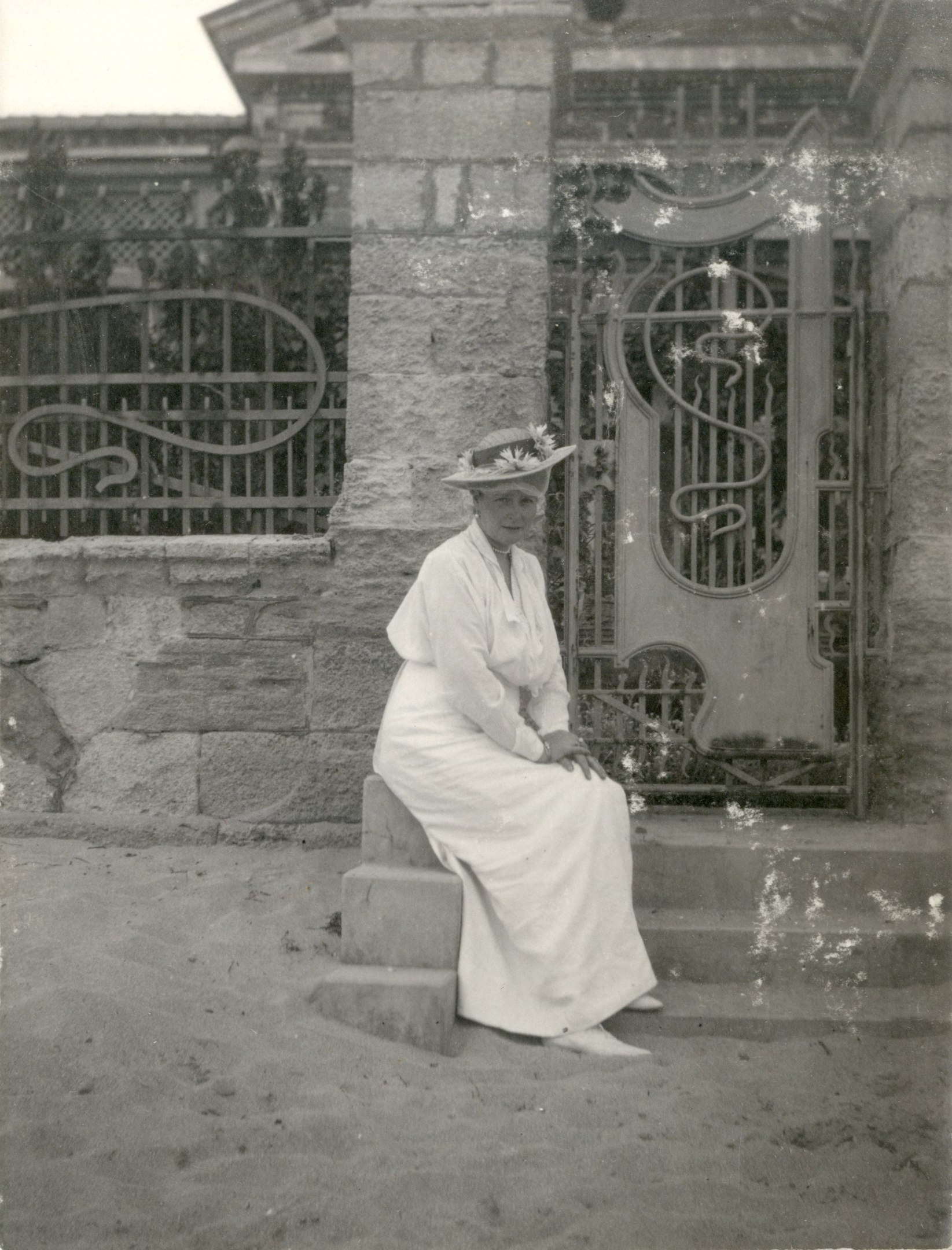

Above: Alexandra at Eupatoria. Photo courtesy of Ilya Grigoryev at lastromanovs on VK.


Above: Tatiana at Eupatoria. Photo courtesy of Ilya Grigoryev at lastromanovs on VK.


Above: Alexei with his friends from Mogilev. Photo courtesy of Ilya Grigoryev at lastromanovs on VK.


Above: Olga, Maria and Alexei with their friend Rita Khitrovo at Eupatoria. Photo courtesy of Ilya Grigoryev at lastromanovs on VK.


Above: Olga and Anastasia playing with peasant children.


Above: Olga and Tatiana with their grandmother, Dowager Empress Marie Feodorovna, at the opening of the British Red Cross Hospital.


Above: Baroness Sophie Buxhoeveden.

The account:

The Empress was but rarely seen in Petrograd in the winter of 1915-1916. Her health was very uncertain, and she frequently had to interrupt her hospital work at Tsarskoe Selo. Her cherished plan of going to see the work of the Grand Duchess Olga Alexandrovna near the fighting line, and of paying a surprise visit to her ambulance trains, had to be given up. The Grand Duchesses Olga and Tatiana replaced their mother as much as they could. They went every week to Petrograd, the Grand Duchess Tatiana to preside at sittings of her Refugee Committee, and the Grand Duchess Olga to receive donations for her soldiers' families at the Winter Palace. Afterwards the young Grand Duchesses would wind up the afternoon by going to the different hospitals in Petrograd, which the Empress would have seen for herself had she been able.

The Grand Duchesses represented their mother at the opening of the British Red Cross Hospital, going with their grandmother, the Dowager-Empress. The Empress had taken the greatest interest in this hospital, and had had several conversations with Lady Muriel Paget, Lady Sybil Grey, and Mr. Malcolm, who were responsible for it. It was established in the Grand Duchess Serge's former Palace, then the property of the Grand Duke Dimitri Pavlovitch, and was equipped by the British Red Cross and very well run by English doctors and nurses. The Empress was able to pay a visit to the hospital before the unit left for the front. Lady Sybil Grey, who went with them, had the ill-luck, after a very short stay, to be hit in the face by a splinter of shell in the trenches near the firing line. She was sent back to Petrograd, and the wound healed well, but there was considerable anxiety felt for her at one time, and the Empress was full of sympathy.

In the spring of 1916 the Empress was able to resume her journeys through the country, though on a smaller scale than in the previous year. These journeys always finished now with a short visit to the Emperor at Mohileff, whither the Cesarevitch had also returned, after a time spent at Tsarskoe Selo recovering from his illness. The sun went out of the Empress's life when she was away from the Emperor, and since the Cesarevitch's last illness that winter her fears for him were never at rest.

The little Cesarevitch had "grown up" considerably through being in the Emperor's constant company. He slept in his father's room, for the house at Mohileff was a very small one, and lunched daily with him and his Staff, talking merrily to the Generals and the members of foreign military missions, forgetting his shyness. He was a great favourite with the officers, and the Empress always begged them not to spoil him, which would have been difficult, as he was a delightful boy. The old Belgian General, Baron de Riquel, and the Japanese military representative, who, in common with all his countrymen, was particularly fond of children, were his especial friends. He also made friends at Mohileff with two little boys, the sons of officers' widows in very modest circumstances. The Empress made the acquaintance of their mothers during her visits, and often sent special invitations to the little boys to come and play with her son, as she felt that he wanted companions of his own age.

The Empress took her four daughters with her on her journeys, and also to Mohileff, where the whole family rejoiced in being together. The Grand Duchesses needed a change from their hospital work. The Grand Duchess Olga Nicolaevna, especially, had so much overtired herself in the course of the winter that she had grown nervous and anaemic; had had to give up actual nursing and supervised the wards, though the Grand Duchess Tatiana still worked in the operating theatre. Large supplies of clothes for refugees were always taken on these journeys, which Tatiana Nicolaevna distributed.

For about ten days in the spring of 1916 the Emperor and the Empress travelled together in the south of Russia, the Empress inspecting hospitals and the Emperor reviewing troops. It was a terribly wet time and the Empress and her daughters went about in mackintoshes with well tucked-up skirts. They went over Her Majesty's sklad at Vinnitza, a small town near the Roumanian frontier, which had been excellently managed all through the war by Mme. de Hartwig, widow of the former Russian Minister to Serbia. This was the centre of all the Empress's stores and ambulances for the Galician front. Thence they went to Bendery, where the Emperor reviewed the Czecho-Slovak legions, formed from former Austrian prisoners of war, and the beginning of the Czecho-Slovak army; units of which, while returning to their own country through Siberia, were later on the first to help Admiral Kolchak in his fight against Bolshevism.

From Bendery they went to Odessa, where the Empress saw the sanatoria for officers set up in connection with the mud-baths of Odessa, and the first Russian iodine factory. Sebastopol was the next stop. They resisted the temptation to go to Livadia, though the doctors advised it for the Empress. It was, as she said, "too great a treat to indulge in during the war." As it was, the trip was a delightful one and did everyone good. The Empress revived, notwithstanding the fatigue, and the Grand Duchesses used to lie like lizards in the sun beside the train at Sebastopol, regardless of their mother's appeals to them to think of their complexions! At Sebastopol, where they had so often stopped in former years on their way to Livadia, they felt the spirit of war-time. There were scarcely any men about in the streets, as it was a naval town and they were all with the fleet. At night all the windows of the Imperial train had heavy, black curtains drawn across them. Every light was covered. All the town was plunged into pitch darkness, as German cruisers had entered the Black Sea, and air-raids were feared. The Empress and her daughters accompanied the Emperor as he visited the forts above the town; but they saw the fortifications at some distance, as the Emperor did not attempt to infringe the rule that no women were to be admitted inside the forts.

From Sebastopol the journey was continued to Eupatoria, where the Empress had established several sanatoria. Eupatoria was lovely, semi-Oriental, and bathed in sunshine, with glowing flowers overhanging the high white walls of gardens and houses, whose high railed windows proclaimed them to be the residences of Tartars. Eupatoria had not been visited by any Russian Emperor since the Liberal Alexander I, and all the population gave the Imperial Family a warm welcome. The Mahommedans even authorised the validé (their name for the Empress) and her daughters to attend a solemn thanksgiving service at the mosque, which no woman ever enters. It was quaint to see the rows and rows of prostrate turbaned men, their shoes all standing before the door. Not a word of the service could be understood, of course, except the Emperor's name occasionally. But their earnest faces, and the Oriental calm and discipline with which they all followed the Mollah in his every movement, made an impressive picture. After the Mahommedans, the Karaim Jews' Synagogue was visited. It was a lovely white marble building, covered with sweet-scented glycinia. A fine tenor chanted the Psalms in Hebrew — it was quite a picture of other centuries and another world.

Those were the lighter sides of the visit. The official side, including service at the cathedral, and visits to numerous hospitals had come first, and the day was brought to an end by a visit to Mme. Vyrouboff, who was undergoing treatment and staying in a seaside villa. Here all the family basked in the sun and forgot their cares for a few brief hours. Months afterwards, this one day in the quiet little town, with its marvellous sun, was remembered and cherished. They had had a few hours' relaxation and quiet there, and were very grateful for it.

In the summer of 1916 the Empress went several times to Mohileff. The whole party lived in the Imperial train, drawn up in the pine woods near the station. In the morning, while the Empress was resting, her daughters visited the cottages in the neighbourhood, played with the children of the peasants, and gave them sweets and presents. All went to luncheon with the Emperor in the house which, to his amusement, was pompously called "the Palace" by the people at Headquarters. It had formerly been the Governor's residence, and bore traces of the progressive bad taste of all the governors who had lived in it. Such hideous stuffs and such terrible imitation oak-grained wallpapers could rarely have been seen together; but the Emperor had other things to think of, and no changes were made.

All the members of foreign missions were invited to these luncheons, as well as the numerous Generals attached to Headquarters and any who came in from the front. The Empress told me that she always felt desperately shy at Headquarters. She had grown unaccustomed to making a big cercle and felt that she was out of her element in such purely masculine surroundings. When she stood in the corner of the room with her daughters, having given her hand to all to be kissed, the bright red spots on her cheeks were sure signs of her nervousness. While the Emperor was engrossed in conversation with some General, she would timidly send one of her daughters to call up someone to her, though she never had the opportunity of talking to some of those whom she would have appreciated most. Her neighbours at luncheon were generally the chiefs of the British and French Military Missions, at first Sir J. Hanbury-Williams and the Marquis de La Guiche, then General Waters and General Janin. She particularly liked Sir J. Hanbury-Williams and talked quite simply to him. He quotes in his book (The Emperor Nicholas II as I knew him) a remark she made to him at one of these luncheons: "War is the passing out of darkness into the light of victory, but victory we must have." This same feeling about victory can be seen in a letter to Princess Louis on December 10th, 1915: "Oh, how one longs for 1916 to bring us Allies glorious victories and peace!"

After luncheon the Imperial party would go out by motor, or down the Dnieper on a small steam launch to an appointed spot where the car or launch would be left, and the Emperor and his daughters, accompanied by the most intrepid walkers of the suite, would go off on a long expedition through the country. It was amusing to see some of the gentlemen lagging behind to avoid the inviting eye of the sovereign, for to the stout these walks were more of a pain than a pleasure. The Emperor walked through fields and woods and villages, once or twice even through private gardens when he missed his way. The surprise of a family of small landowners can be imagined when the whole Imperial party of some ten ladies and gentlemen walked through their garden, and appeared unexpectedly in front of the balcony where they were sitting round a steaming samovar enjoying their afternoon tea! The Emperor politely apologised for the intrusion, but was met with rather black looks. Then someone said "It is the Emperor", and all the flowers in the garden would have been pressed on the Grand Duchesses if the hospitable owners could have had their way.

Another time the young Grand Duchesses and I nearly fell into a pond from a raft on to which we had climbed to pick some water-lilies for the Empress, and had to be rescued by the Emperor, though he said he had never before provided Her Majesty with flowers under such difficult conditions.

The Empress stayed near the cars or by the river during these expeditions, with Mme. Vyrouboff, for she could not take long walks now. She liked to talk to passing villagers, and the conversation generally resulted in some private charity to the people who, at first, did not know who she was.

After the walk came tea, and then the Emperor had to return to his work. Sometimes people of special interest were invited, officers returning from the front, doctors, etc., and the suite, of course, were present. After tea, the ladies returned to the train, where the Emperor joined his family for dinner, going back immediately afterwards to his work again. About eleven o'clock tea was served again, in the Russian fashion, when the Emperor would reappear, to read the daily papers and drink the same number of glasses of tea each evening, while his daughters and the Grand Duke Dimitri Pavlovitch, who sometimes spent the evening with their Majesties, kept up a lively conversation together. The Grand Duke teased both mother and daughters, and the Empress was often laughing and talking as gaily as the girls, infected by the buoyant spirits of the young people. Only those members of the suite who were living in the train, and the two gentlemen who had come with the Emperor, were present at that last meal, and the conversation then was generally quite informal, and the Emperor commented on the news he had read.

It was said that the whole of Headquarters disliked the arrival of the Empress at Mohileff, as they had an idea that she influenced the Emperor much more than was really the case; and every appointment or every change that occurred after she had been there was laid at her door. This was not so.

I myself happen to have witnessed an incident that proves that the dismissal of Sazonoff, which has always been attributed to the Empress's influence and most bitterly commented upon, was not brought about by Her Majesty. I was with the Empress in her coupé in the train at Headquarters, when a note from the Emperor was brought in. The Empress read it with signs of the greatest surprise, and, on the spur of the moment, told me its contents. The Emperor wrote that he had decided to dismiss Sazonoff. This was news for the Empress, who seemed dubious, and expressed the opinion that she feared the moment was inopportune.

The last journey that the Empress took was in December 1916, when she went to Novgorod, a town she had longed to visit on account of its numerous beautiful old churches. Now she had no time to see these, as her visit was mainly to the war hospitals. The Governor escorted her round them, and the nobility gave a large tea party in her honour, but it was clear to those who were with her that there was no warmth in the welcome, though the Empress did not realise it. She managed to see some of the old church treasures, and the cathedral, and she went also with her daughters and the Prince Joan Constantinovitch to see an old Staritza, who was over a hundred years old, and much reverenced in the town. The old woman greeted her with the words: "Here is the martyr Empress Alexandra." Her Majesty seemed not to hear. She received the Staritza's blessing and went away, cheered and comforted; but those who had been with her came back depressed and apprehensive, for they felt the reception was an omen.

Friday, December 24, 2021

Lili Dehn's memories of the Mauve Boudoir

Source:

The Real Tsaritsa, Lili Dehn, 1923


(photo courtesy of GMZ Tsarskoe Selo)

The 1,000th post on this blog!

The Mauve Boudoir memories:

One day the Empress and I were sitting in the mauve boudoir, when we heard the excited voices of the Tsarevitch and Titi [Lili's son] in the next room.

"I believe they're quarreling," said the Empress, and she went to the door and listened to what the children were saying. Then she turned to me laughing. "Why, they're not quarreling, Lili. Alexis is insisting that Titi shall come into the mauve room first, and the good Titi won't hear of it!"

...

On December 16th [1916], when I was at Tsarkoe Selo, I told the Empress that I wanted to see Rasputin on the morrow, but just before starting for his house — about five o'clock on the afternoon of December 17th — I was rung up from Tsarkoe Selo — the Empress wished to speak to me. Her voice seemed agitated.

"Lili," she said, "don't go to Father Gregory's to-day. Something strange has happened. He disappeared last night — nothing has been heard of him, but I'm sure it will be all right. Will you come to the Palace at once?"

Thoroughly startled by this disturbing news, I lost no time in taking the train to Tsarkoe Selo. An Imperial carriage was waiting for me, and I soon found myself at the Palace.

The Empress was in her mauve boudoir; once again I felt the premonition of coming disaster, but I endeavoured to disregard it. Never did the "cabinet mauve" look so homelike. The air was sweet with the fragrance of many flowers and the clean odour of burning wood; the Empress was lying down, the Grand Duchesses sat near her, and Anna Virouboff was sitting on a footstool close to the couch. The Empress was very pale — her blue eyes were full of trouble, the young girls were silent, and Anna had evidently been weeping. I heard all there was to tell me: Gregory had disappeared, but I believe the Empress never imagined for one moment that he was dead. She discountenanced any sinister conjectures; she soothed the ever weeping Anna, and then she told me what she wished me to do.

"You will sleep in Anna's house to-night," she said. "I want you to see people for me tomorrow — I am advised that it will be better for me not to do so."

I told the Empress that I was only too happy to be of service to her. ...

...

On Saturday, February 25th, 1917, the Empress told me that she wished me to come to Tsarkoe Selo on the following Monday, and I was (let me confess it) still in bed when the telephone rang at 10 a.m. I suppose my delay in answering must have amused the Empress, for her first words were: "I believe you have only just got out of bed, Lili. Listen, I want you to come to Tsarkoe by the 10.45 train. It's a lovely morning. We'll go for a run in the car, so I'll meet you at the station. You can see the girls and Anna, and return to Petrograd at 4 P.M. — I'm certain you won't catch the train, but anyhow I'll be at the station to meet it."

I dressed at express speed, and, snatching up my gloves, a few rings, and a bracelet, I ran into the street in search of a fiacre. I had quite forgotten that there was a strike, and no conveyances were available! ...

The train for Tsarkoe was just moving out of the station when I arrived on the platform, ... as the Grand Duchesses Anastasie and Marie had just come to fetch me, I returned to the private apartments with them.

The winter afternoon was fast drawing in, and I found the Empress alone in her boudoir. She could give me no message for Mme Pistolkors. "I don't know what to advise," she said, sadly. Then, turning to me, "What are you going to do, Lili? Titi is in Petrograd... had you not better return to him this evening?"

At the sight of the Empress, so tragically alone, so helpless in the midst of the signs and splendour of temporal power, I could hardly restrain my tears. Controlling myself with an effort, I tried to steady my voice:

"Permit me to remain with you, Madame," I entreated.

The Empress looked at me without speaking. Then she took me in her arms and held me close, and kissed me many times, saying as she did so:

"I cannot ask you to do this, Lili."

"But I must, Madame," I answered.... "Please, please let me stay. I can't go back to Petrograd and leave you here."

The Empress told me that she had tried to 'phone the Emperor, and that she had been unable to do so. "But I have wired him, asking him to return immediately. He'll be here on Wednesday morning."

...

I spent the evening with the Empress in the mauve boudoir, and she told me how glad she was to have me near her.

...

During the afternoon the Empress called me into her boudoir. "Lili," she said, "they say that a hostile crowd of 300,000 persons is marching on the Palace. We shall not be, we must not be afraid. Everything is in the hands of God. To-morrow the Emperor is sure to come.... I know that, when he does, all will be well." She then asked me to 'phone to Petrograd, and get in touch with my aunt, Countess Pilar, and other friends. I 'phoned to several, but the news grew worse and worse. At last I 'phoned to my flat. The Emperor's A. D. C., Sablin, who lived in the same building, answered my ring. I begged him to take care of Titi, and, if it were possible, to join us at Tsarkoe, as the Imperial Family needed protection; but he replied that a ring of flames practically surrounded the building, which was well watched by hostile sailors. He managed, however, to bring Titi to the 'phone — and my heart ached when I heard my child's anxious voice:

"Mamma, when are you coming back?"

"Darling, I'll come very soon."

"Oh, please come; it's so dreadful here."

I felt torn between love and duty, but I had long since decided where my duty lay.

I told the Empress what Sablin had reported; she listened in silence, and then, by some tremendous effort of will, she regained her usual composure. Her strength strengthened me. We had, indeed, every need for courage. ...

...

The officers of the Garde were received by the Empress in the mauve boudoir during the morning [March 2]: I was present, and I heard from one of my husband's friends that the duty of taking the Garde to Petrograd had been carried out by a "temporary gentleman," Lieutenant Kouzmine. The officers were furious, especially their commandant, Miasocdoff-Ivanof, a big, burly sailor, whose kind eyes were full of tears.... One and all begged to be allowed to remain with the Empress, who, almost overcome by emotion, thanked them, saying: "Yes — Yes — I beg you to remain: this has been a terrible blow, what will the Emperor say when he hears about it."

...

After lunch, when the Empress and I were sitting in the mauve boudoir, we were startled by the sudden entrance of Volkoff. He was very agitated, his face was pale, he trembled in every limb. Without waiting to be addressed by the Empress, and utterly oblivious of etiquette, he cried: "The Emperor is on the 'phone!"

The Empress looked at Volkoff as if he had taken leave of his senses; then, as she realised the full import of his words, she jumped up with the alacrity of a girl of sixteen, and rushed out of the room.

I waited anxiously. I kept on praying that a little happiness might yet be hers... perhaps, for all we knew, the danger had passed.

When the Empress returned, her face was like an April day — all smiles and tears!

"Lili," she exclaimed, "imagine what were his first words... he said: 'I thought that I might have come back to you, but they keep me here. However, I'll be with you all very soon.'" The Emperor added that the Dowager Empress was coming from Kieff to be with him, and that he had only received the Empress's wires after the abdication. "The poor one!" said the Empress. "How much he has suffered! how pleased he'll be to see his mother!"

...

We remained in the mauve boudoir until quite late, but, just as we were about to go to bed, Volkoff entered in a state of painful agitation. He managed to tell us that M. Goutchkoff had arrived, and insisted upon seeing the Empress. It was then 11 o'clock.

"But, at this hour — it's impossible," said the Empress.

"Your Majesty, he insists," stammered Volkoff. The Empress turned to me — terror and pathos in her eyes. "He has come to arrest me, Lili," she exclaimed. "Telephone to the Grand Duke Paul, and ask him to come at once." Regaining her composure, the Empress rearranged the Red Cross head-dress which she had taken off, and stood waiting in silence for the Grand Duke. At length, after what seemed an interminable agony of suspense, the Grand Duke entered, and the Empress told him in a few words about her ominous summons. The next moment, loud voices in the corridor, and the banging of a door, announced Goutchkoff's arrival in the adjoining room. ...

At last footsteps sounded in the corridor — the door of the boudoir opened — and, to our unspeakable relief, we saw the Empress!

Marie ran towards her mother, half crying, half laughing, and the Empress quickly reassured us.

"I am not to be arrested this time," she said. "But, oh! the humiliation of the interview! Goutchkoff was impossible — I could not give him my hand. He told me that he merely wanted to see how I was supporting my trials, and whether or no I was frightened." Her pale cheeks were rose-flushed, her eyes sparkled — at this moment the Empress was terrible in her anger. But she soon regained her calm dignity, and we bade her good night, thankful that she was spared to us.

...


(photo courtesy of Ms. Svetlava Klychkova)

It was a bright moonlight night [March 8]. Outside, the snow lay like a pall on the frost-bound Park. The cold was intense. The silence of the great Palace was occasionally broken by snatches of drunken songs and the coarse laughter of the soldiers. The intermittent firing of guns was audible. It was a night of beauty, defiled by the base passions of men.

I went quietly downstairs to the mauve boudoir. The Empress was waiting for me, and as she stood there I thought how girlish she looked. Her long hair fell in a heavy plait down her back, and she wore a loose silk dressing-gown over her night-clothes. She was very pale, very ethereal, but unutterably pathetic.

As I stumbled into the boudoir with my draperies of sheets and blankets she smiled — a little affectionate, mocking smile, which deepened as she watched me trying to to arrange my bed on the couch. She came forward, still smiling. "Oh, Lili... you Russian ladies don't know how to be useful. When I was a girl, my grandmother, Queen Victoria, showed me how to make a bed. I'll teach you." And she deftly arranged the bedding, saying, as she did so: "Take care not to lie on this broken spring. I always had an idea something was amiss with this couch."

The bed-making "à la mode de Windsor" was soon finished, and the Empress kissed me affectionately and bade me good night. "I'll leave my bedroom door open," she said; "then you won't feel lonely."

Sleep for me was impossible. I lay on the mauve couch — her couch — unable to realise that this strange happening was a part of ordinary life. Surely I must be dreaming; surely I should suddenly awake in my own bed at Petrograd, and find that the Revolution and its attendant horrors were only a nightmare! But the sound of coughing in the Empress's bedroom told me that, alas! it was no dream... She was moving about, unable, like myself, to sleep. The light above the sacred ikon made a luminous pathway between the bedroom and the boudoir, and presently the Empress came back to me, carrying an eiderdown. "It's bitterly cold," she said. "I want you to be comfortable, Lili, so I've brought you another quilt." She tucked the quilt well round my shoulders, regardless of my protestations, and again bade me good night.

The mauve boudoir was flooded with moonlight, which fell directly on the portrait of the Empress's mother, and on the picture of the Annunciation. Both seemed alive.... The sad eyes of the dead woman watched the gradually unfolding tragedy of her daughter's life, whilst the radiant Virgin, overcome with divine condecension, welcomed the angel who hailed her as blessed among women.


(image courtesy of Gosfond)


(image courtesy of Laura Mabee)

Masses of lilac were arranged in front of the tall windows. It was customary for a fresh supply of lilac for the mauve boudoir to be sent daily to Tsarkoe Selo from the south of France, owing to the troublous times, no flowers had reached the Palace for a couple of days. Just before dawn, the dying lilac seemed to expire a last breath of perfume... the boudoir was suddenly redolent of the perfume of Spring... tears filled my eyes. The poignant sweetness hurt me — winter was around us, and within our hearts. Should we ever know the joys of blue skies, and the glory of a world new-born?


Thursday, February 11, 2021

Sir John Lavery's memory and description of Alix

Source:

The Life of a Painter, Sir John Lavery, 1940


The memory:

Of all the royalties that I have painted the one that stands out is the Princess Alix of Hesse, late Empress of Russia, because of her great beauty. I had been given a large reception room in the Schloss for a studio. The first morning, I well remember, I woke with a blinding headache, a prevalent trouble of mine, usually meaning a day in bed. It was the morning that the Princess was to sit, and I forced myself to go to the studio where a huge coal fire at either end was banked up. There were large hairy rugs in front. It was most fortunate that I arrived early, I was no sooner there than one fireplace was in flames and then the other. I was alone, there was no means of calling servants, so I rushed about, finally getting help — the whole staff with all sorts of fire extinguishers. It was astonishing how quickly everything was put in order; half an hour afterwards, when the Princess came in, no one would have known that flames and volumes of smoke had filled the room so recently. Even the air had been reconditioned. The Grand Duke was so pleased with the little study I painted that he asked me to come back to Darmstadt to paint a life-sized portrait of his daughter before she became Czarina. I have often regretted that I did not do it. She hypnotized me by the strange sadness of her eyes, like one on the verge of insanity yet sane enough to realize it. I shall always remember the look almost of terror that came and went as I was painting her.


Above: The portrait of Alix.


Above: Sir John Lavery.

Friday, November 27, 2020

Major-General Sir John Hanbury-Williams' memories of Alexandra

Source:

The Emperor Nicholas II as I Knew Him, by Major-General Sir John Hanbury-Williams, 1922

The excerpts:

29th October 1915.
Sat next the Empress at dinner, she having come here for a short visit.

The Empress asked me about my family again this evening, and I told her that to-day was the birthday of my father, who, if he were still alive, would be 116 to-day, as he was born in 1799.

The Empress spoke to me of her indignation at the delay caused to the Empress Mother in her journey to Russia by the German authorities, and of her own determination in those anxious days just before the outbreak of war that the cause of Russia and the Allies was a just one. That she dreaded the horrors of war which must follow there is no doubt, but she stood loyally for Russia throughout.

Her relief when she heard that Great Britain was to be one of the Allies was great. She had always loved our country, and had faith that never wavered of our determination and support.

How far it was her influence that persuaded the Emperor to take personal command of the troops in the field is a vexed question.

I give the account of the Emperor himself to me personally on his decision, and there was no particular call for his telling me the facts as clearly as he did.

--

19th May 1916.
The Empress arrived yesterday and told me how pleased she had been with her visit to the British hospital at Petrograd, and what excellent work Lady Sybil Grey was doing there.

I found the Empress much easier to get on with than I expected, probably for the reason of her great love for my own country, and her custom of talking English constantly to the Emperor, and the many interests she had on matters upon which I was able to give her news or information.

When she told me how terribly shy she felt on coming into the room where we were all assembled — and it was a very large gathering, the chiefs of all the Allied military missions, the French, Belgian, Italian, Japanese, Serbian, and a galaxy of Russian officers, with a sprinkling of Russian officials, both civil and diplomatic — I told her that the Emperor was always there, and then said laughingly to her: 'Your Majesty is so accustomed to visiting hospital cases and seeing operations that the best thing to do is to imagine to yourself that we are only 64 operation cases, and all will go well.'

It is probable that her own shyness, which gives the impression of aloofness, prevents people from talking to her and freezes up conversation.

The moment one began to laugh over things she brightened up and talk became easy and unaffected.

To-day being the Emperor's birthday we all attended a very beautiful service at the garrison church, after which there was a levee, I being the doyen leading in to wish the usual happy returns.

Sir Samuel Hoare arrived on a short visit.

At the birthday dinner I sat next the Empress, who told me a great deal of her hospitals, and of her gardens in the Crimea, from which the wonderful show of flowers which decorated the table came. The Emperor, who sat next the Empress, told me that she sent him flowers every day for his room. They both talk English as their own ordinary means of conversation, and the Empress seemed very well and in good spirits. She asked a great deal about the Duke of Connaught and Canada, and curiously enough on return to my quarters I found a letter from H. R. H. from Canada.

--

16th June 1916.
Another lot of most welcome flowers arrived from the Empress, for which I thanked the Emperor. ...

--

8th July 1916.
Some more beautiful flowers sent me by the Empress.

--

23rd July 1916.
I had an opportunity of thanking the Empress, next to whom I was at dinner, for her kind and continual gifts of flowers to me.

She leaves again to-morrow in her Red Cross car.

The Empress walked in to-night, looking like a beautiful picture, with her daughters. Hers is the only sad face in the family, but it lightens up when she comes by and greets one. To-night, however, she looked as if she had been suffering and was anxious about something.

As I was next to her at dinner, I asked her if she had been working very hard.

She said 'No,' but that she had trouble from her heart and that it alarmed her. Not knowing much of illness of this kind, I merely said that I knew of one case where the person concerned had found that it was merely a muscular trouble and soon passed off.

It seems extraordinary how little it takes to cheer her up, for the conversation turned off on to the subject of pictures and Verestchagin's work, and till the end of dinner she seemed quite happy.

It is a very curious character, a devoted wife and mother, and yet acting under bad influences which react on her, on all that belong to her and her own country.

She is so proud of Russia and so anxious that the Allies should win the war, and yet, without being aware of it, carrying out bad advice in the selection of advisers and others. War to her seems almost more terrible, if such a thing is possible, than to other people. But she spoke of it to me as the 'passing out of darkness into the light of victory.' 'Victory we must have.'

--

25th July 1916.
... The Emperor told me at dinner that the Empress had sent me her best wishes in her daily telegram to him.

--

15th August 1916.
I lunched with the Emperor and Empress, both most kind in urging me to come back as soon as possible. After lunch I walked up and down for a long time with him in the garden, and he gave me various letters and messages from him and the Empress to take to England.

As he said good-bye, he added: 'Tell them in England of our good feeling for them all and of the high appreciation felt here of the splendid work of the British Navy and Army. They must not believe any stories which go about trying to make mischief between the two countries.

'We mean to fight this war out to the end with our good Allies. And the only peace we shall agree to will be one that will do us all honour together when once we have achieved victory.'

The Empress spoke of the education of children, and how anxious she was that her daughters should be simple and unaffected, that in England girls had so many opportunities of healthy out-of-door amusements, and moved about more.

She told me that we must not spoil the little boy, and I assured her that we wouldn't; indeed he was not the sort that is easily spoiled, and his tutor kept him in good discipline.

She feared that the war would sadden their lives, but at the same time saw quite clearly that an experience such as we were going through would impress them without leaving too lasting a sad memory.

'What a responsibility,' she said, 'for those who started this awful war, killing, wounding, suffering, and the dark shadows thrown over young lives, which ought to have nothing but brightness.' She at first could not believe the stories that came from Belgium of the treatment of the civil population by the enemy. 'But now we have proofs, and no punishment can be strong enough for the offenders. Your English soldiers would scorn such ideas of treating even the worst of their enemies in this way.' ...

--

20th October 1916.
The Empress here, and I sat next to her at lunch, when we had a long talk about my visit to England, a country for which she has such great affection and in which she takes so much interest. She also wanted to know all about my family, and especially of the two boys (the elder whom I left, I fear, not far from the end, and the younger one who was so badly wounded). She is indeed most kind, sympathetic and thoughtful for others. She told me that she had not been at all well herself, nerves and heart trouble.

What a difference it would make to Russia if she had good health and nerves.

The Emperor sent for me after lunch and assured me that all was right in Russia, and determination to continue the war to the bitter end as firm as ever. He quite realises the importance, he says, of helping Rumania, and hopes that some forward action from Salonika will help.

He trusts that any rumours as to a premature peace on the part of Russia will be treated for what they are worth, which is nothing. Enemy intrigue is at the bottom of these rumours.

He is as fully determined as are his armies to continue the struggle until Victory is assured. Idle gossip in some centres, such as Petrograd, is not worth heeding, and he hoped that no one in England would be affected by it. German and enemy intrigue was the cause of all the malicious talk.

The Empress had been equally keen in her anxiety for the success of the Allies, and I hope this reassuring report will continue. I told the Emperor that I hoped the Empress would have a long rest, as she seemed overwrought. ...

--

24th October 1916.
The Empress sent me some more flowers, and asked if she could see my children's photographs, which I managed to produce, and the next day when I was with the Emperor at dinner he told me that she was sending me a photo of herself and the little boy.

--

14th November 1916.
... More chrysanthemums and other flowers from the Empress.

--

27th November 1916.
The Empress-Mother's birthday. H. I. M. went to dine with the Empress, and I was able to send a message of thanks for more flowers. ...

--

28th November 1916.
Sat next the Empress at lunch, when she seemed in really good spirits and as kind as ever, asked a great deal about my wounded son, and seemed hopeful about the war. ...

--

1st December 1916.
Their Majesties both congratulated on Queen Alexandra's birthday, and drank her Majesty's health.

--

5th December 1916.
Both Emperor and Empress were present at a cinema performance for the soldiers and were very well received.

In the evening I had a long talk to the Empress, who spoke of the necessity for people keeping cheerful and not losing their heads over the length of the war, which she was convinced would end in the victory of our Allied forces.'

After dinner she beckoned to me to come up and talk to her again. I crossed the room to the piano, where we stood alone. H. I. M. then referred to the wicked slanders that were being spread about in the large towns, but hoped that the recent utterances of Ministers on 'both sides of the water' would convince people of the firm determination of the Allies to see the war through to the bitter end.

She then said: 'You are, I hear, going up to Petrograd on a short visit soon?' 'Yes, your Majesty, I hope to pay a visit and see the Ambassador and hear the news up there.'

'Well, promise me if you go that you will not believe all the wicked stories that are being gossiped about there.'

It gave me the opportunity to say something which I bad in my mind, and which could not have been said had not the opportunity offered itself. It was on my lips when the Emperor came up laughing and said: 'What are you two plotting about in the corner?'

The conversation broke off, as they then bid us good-night and I left.

[N.B.: That was the last occasion upon which I saw the Empress. No doubt if I bad spoken my words would not have had much effect, but I bad been urged to do so by someone much concerned, and had never expected to have the chance.]

--

30th December 1916.
This evening while Charlie Burn, a very old friend whom I was glad to have with me, was sitting in my room (at the Hotel Astoria at Petrograd), I was rung up by Wilton of The Times:

'They have got him at last, General.'

I guessed to whom lie referred.

It was the end of Rasputin.

The year 1917 opened with the death of Rasputin as the talk of Russia.

So much has been written about this notorious scamp that it would only be a tiresome repetition to give a sketch of him here.

He was never allowed to come to the Headquarters of the Armies in the Field.

A brief summary, however, of what I gathered about him, touching as it does, unfortunately, on the life of the Empress, is almost necessary.

As I spent most of my time at Headquarters or in the field, I only paid occasional visits to Petrograd, and naturally did not endeavour to see him, or make inquiries on a question which, being in the mouths of everyone, was sufficiently discussed and talked about to make further probing into it unnecessary.

Since those days I have come to the following conclusions:

His influence over the Empress was undoubted. It arose over the history of the birth of her son a son being granted to her, she thought, owing to the prayers of this wicked and wandering monk.

The delicate health of the young heir was the cause of great anxiety to her, and she placed all her faith on Rasputin to keep the boy in health.

--

JANUARY 1917
It is possible that he had some of the qualities of a 'nerve specialist,' and either through attendance on the invalid, or by his influence over the mother, induced the latter to believe that he was indispensable for her boy's sake.

So gradually he became her adviser on matters of state, and through the Empress his influence affected the Emperor.

How much he was a paid agent of the enemy it is difficult to say, but there is no doubt that he received money from some sources which did good work for Germany at the time, and bad for Russia.

There seems but little doubt that his principal agent at Court was, wilfully or not, the celebrated Madame Vouirobova, who was very rarely away from the Empress.

The known influence he exercised over the Empress, and thus upon the Emperor, made him the court of appeal for all those intriguers and place-seekers who had their own axes to grind, and knew full well that here was a means of assuring their success. No doubt, wherever the money came from, whether from German sources or others, it became well spent by those who, for their nefarious purposes, brought about, by 'slow drops of poison,' as it were, the ruin of Russia.

The public scandal reached its climax in 1916, when he was 'removed' to other spheres, and of the two spheres there can be but little doubt in which he reposes.

And yet it always seems to me, in going back over past history, that the death of Rasputin, however desirable it was on moral and other grounds, was the factor leading to the final debacle of the Romanoffs.

Instead of saving Russia, by another of the ironies of fate which have pursued that great and unfortunate country, it helped to ruin it.

Looking at all the facts coldly and dispassionately, it seems possible that if this 'happy dispatch' had been postponed till a little later — after the war-Russia might have been spared the terrible blow which loyal Russians felt in the desertion by their country of the Allied cause.

But one thing must always be remembered — his dealings with the Empress were those of a bad adviser, an imaginary saint, who she believed, alas! had the interests of her country and of her son at heart.

Some stories of the many published about him were absolutely untrue and unjustified, except to those who wished for a lucrative result from them.

An unscrupulous blackguard, posing as a saint, and, owing to the cures which he apparently effected on the little Tsarevitch, trusted and believed in by the Empress, whose love for her son and naturally nervous temperament made her an easy prey to advice and suggestions from Rasputin affecting political and other appointments, on which she in her turn over-persuaded the Emperor.

The scandals which he had caused led to tales of worse ones, most of the latter being, however, without any foundation.

I never saw him, as he was not permitted to come to the armies, and he was not a person that one was anxious to see.

But anyone who knew the Empress knew full well that she might have been spared many of the wicked accusations which were made concerning her dealings with him.

--

4th January 1917.
In the train last night on my return from Petrograd to Headquarters I travelled with one of the Emperor's A.D.C.'s. He was naturally full of the Rasputin episode, and anxious as to its results. The question is: What will be done with the officers who took part in it? If they suffer in any way there will be trouble. The best thing, as I told my friends, would be to pack them off to their regiments at the front. It is such a peculiar case, reading like a romance of the Middle Ages, that it may lead to any and all sorts of trouble, and it requires a very strong man at Court to place the matter in a clear and impartial light before their Majesties.

The difficulty would be specially with the Empress, being as she is a firm believer in the good faith of Rasputin. And her influence reacts on the Emperor.

I confess that even with the disappearance of the most important factor in the drama I see no light ahead yet, and the situation may develop into anything. ...

The crowned heads of this country are so far from their people, and the Empress through shyness and a nervous nature is but rarely seen, though she has worked splendidly for the sick and wounded, and has a really kind and sympathetic nature, which unfortunately no one experiences except those who are very near her, or who happen to have seen a good deal of her, as I have done.

Shyness gives at once the impression of aloofness, with the result that it 'puts off' anyone getting to know her or being able to tell her things she should know.

At present she stands alone. It is a sad business, and when one looks at those pretty daughters one wonders what will happen to them all. ...

--

11th January 1917.
As the Russian New Year falls in two days wrote to-day to my old friend, Count Fredericks, to ask him to convey my respectful good wishes to the Emperor and Empress.

I said that I hoped that the new year might bring us the peace which I knew they wished to see brought about by our victorious arms, and I added that I hoped their Imperial Majesties would always find good advisers to help them in times of difficulty. ...

--

It is difficult to offer an estimate of character of the one without the other. More difficult, perhaps, to speculate upon what would have happened if they had never met, and he had found another consort.

The Emperor — till too late — was a confirmed autocrat, apart, I believe, from the influence of the Empress, who had identical views as to the government of the country.

In a speech made in January 1895 he had said: 'Let them [the people] know that I, devoting all my efforts to the prosperity of the nation, will preserve the principles of autocracy as firmly and unswervingly as my late father of imperishable memory.'

It was the teaching of his boyhood, and he felt it his duty to hand these principles on.

It is possible, however, that had he married someone else, possessed of a clear head and the influence which might have been exercised with him by one who, though not a courtier, was so near him as to be available at any time to suggest and advise, circumstances might have worked out quite differently. As it was, even a courtier who had the good sense to speak out with honest endeavour — and how rare such courtiers are to be of service went to the wall. Whether that was the independent action of the Emperor alone, or of some additional pressure from the Empress, I do not know. The fact remains that an already confirmed autocrat became more so under her influence.

That they honestly believed that it was the right system for the government of their country is certain. Thus there existed a couple working hand in hand, as they believed and imagined, for the good of their country, and the dangers of the autocratic system became intensified by the fact that the stronger influence of the two was that of the Empress, whose ill health and neurotic character not only cut her off from the outside world of Russia, but brought her under other influences, which reacted again upon the Emperor and finally brought him, loyal and devoted as he was, to his fall.

Appointments and dismissals of ministers lay entirely in the hands of the Emperor, but the adviser who brought them about was in most cases the Empress.

The combination of an Emperor so devoted to his Empress that her word was law, and of an Empress led unconsciously by the worst possible advisers, brought about their ruin and that - for the time being - of their country.

According to M. Gilliard's account of the last days of the Imperial family, those fine qualities of the Empress which showed themselves in her care and devotion to the sick and wounded during the war became still more evident in the days of distress, misery and ignominy which crowned the end.

Even her critics and her enemies, and she had many, will accord her a meed of praise for the courage and devotion which, even in what must have been the most intense purgatory to her, she showed unselfishly for her husband and children.

And so in death they were not divided.

I was much struck, closely interested as I was in Russian affairs, at the apparent lack of interest, almost amounting to indifference, with which the news of the fate of the Russian Imperial family was received in England. It was probably to be accounted for by two reasons, the number and rapidity of the march of events connected with a great war and its sequences, and the uncertainty as to the truth of the reports, confirmation or contradiction being almost daily reported, till a lack of interest ensued.

The fact remains, however, that one of the greatest tragedies in history was, to all appearances, quickly forgotten, except by those to whom it came very near.

As to the alleged pro-Germanism of the Emperor and Empress, I think I have said enough in the preceding pages to dispel the idea of this accusation.

I may add another note upon the subject.

As is known to those taking an interest in the question, a commission was appointed by the Revolutionary Government with the duty assigned to it of searching through all the letters, both official and private, of the Emperor and Empress.

The Commission apparently did its work with zeal and such enthusiasm as can be found by those who enjoy the prying into the personal and private and family affairs of other people.

No doubt, all agog for some scandalous discovery, or proof of guilt by the discovery of letters to the enemy, or expressions of affection for the Germans, they scanned the pages before them, word for word.

What was the result?

M. V. M. Roudnieff, one of its members, allowed indignation to master his surprise, and published his personal report, proving to the world at large that not a jot or a tittle of evidence was to be found.

The mysterious intrigues of the Empress with the enemy vanished.

The accusations of disloyalty on the part of the Emperor were exploded.

Those who knew them received this news with no surprise. Those who professed to know them, and maligned them, probably preferred to look elsewhere for any other kind or other sort of news they could find.

What followed? The irony of fate threw the country where accusations of disloyalty had dethroned an Emperor and Empress, into the arms of the very enemy with whom they had been supposed to intrigue, and Brest-Litovsk and Bolshevism ruined Russia.


Above: Alexandra.


Above: Major-General Sir John Hanbury-Williams.


Above: Nicholas and Alexandra.


Above: Olga, Tatiana, Maria and Anastasia.


Above: Alexei.


Above: Grigori Rasputin.

Thursday, July 23, 2020

Anecdote of one of Alexandra's hospital visits, from the memoirs of Tatiana Botkina

Source:

Memories of the Imperial Family before and after the Revolution, by Tatiana Melnik-Botkina, 1921

http://emalkrest.narod.ru/txt/botkina.htm

The anecdote:

Однажды, в самом начале войны, Ее Величество и Великие Княжны посетили лазарет, устроенный моим отцом в занимаемом нами казенном доме. Мы с младшим братом были только вдвоем дома. Мой отец, как всегда, страшно занятой, уехал по делам, а сестра милосердия ушла на полчаса домой, когда к нам наверх прибежала горничная с известием о приезде Ее Величества, и Великие Княжны Ольга Николаевна и Татьяна Николаевна, как всегда, скромно одетые в темные пальто и шляпы, уже были в лазарете.

Большинство раненых были выздоравливающие и, сидя - кто в халате, кто в нижнем белье - играли в карты. Ее Величество подошла к ним и спросила, во что они играют.

- В дурачки, Ваше Величество, - был ответ.

В это время подошли мы, и Ее Величество обратилась к нам с вопросами, но ласковый тон Ее Величества и счастье Ее видеть, как всегда, лишили меня всякого самообладания, и я отвечала что-то очень бестолковое.

Тогда Ее Величество подошла к лежавшему. Это был солдат 35 лет, глухой, ревматик и до такой степени изнуренный, что ему можно было дать лет 75. Он лежал и читал Евангелие, ранее присланное Ее Величеством, и даже не обратил внимания на вошедших и не догадывался, кто это заговаривает с ним.

- Ты что читаешь? - спросила Ее Величество, наклоняясь к нему.

- Да вот все ноги болят.

Ее Величество улыбнулась и попробовала задать другой вопрос, но ответ был такой же бестолковый, и Она, отойдя, попрощалась с нами и вышла вместе с Великими Княжнами в переднюю.

English translation (my own):

Once, at the very beginning of the war, Her Majesty and the Grand Duchesses visited the infirmary set up by my father in the government house we occupied. My younger brother and I were only at home together. My father, as always, terribly busy, went away on business, and the sister of mercy went home for half an hour, when the maid ran upstairs with the news of Her Majesty's arrival, and the Grand Duchesses Olga Nikolaevna and Tatiana Nikolaevna, as always, modestly dressed in dark coats and hats, were already in the infirmary.

Most of the wounded were convalescents and, sitting - some in a dressing gown, some in underwear - were playing cards. Her Majesty approached them and asked what they were playing.

“Fools, Your Majesty,” was the answer.

At that time, we approached, and Her Majesty turned to us with questions, but Her Majesty's gentle tone and the happiness of seeing her, as always, deprived me of all composure, and I replied something very incoherent.

Then Her Majesty went to the man who was lying down. He was a 35-year-old soldier, deaf, rheumatic and so exhausted that he could have passed for 75 years old. He lay and read the Gospel previously sent by Her Majesty, and did not even pay attention to those who entered and did not know who was talking to him...

"What are you reading?", Her Majesty asked, bending over to him.

"Yes, all my legs hurt."

Her Majesty smiled and tried to ask another question, but the answer was just as incoherent, and she walked away, said goodbye to us and went out with the Grand Duchesses into the hall.


Above: Alexandra.


Above: Olga and Tatiana.


Above: Tatiana Botkina, the daughter of the family physician Dr. Eugene Botkin.